
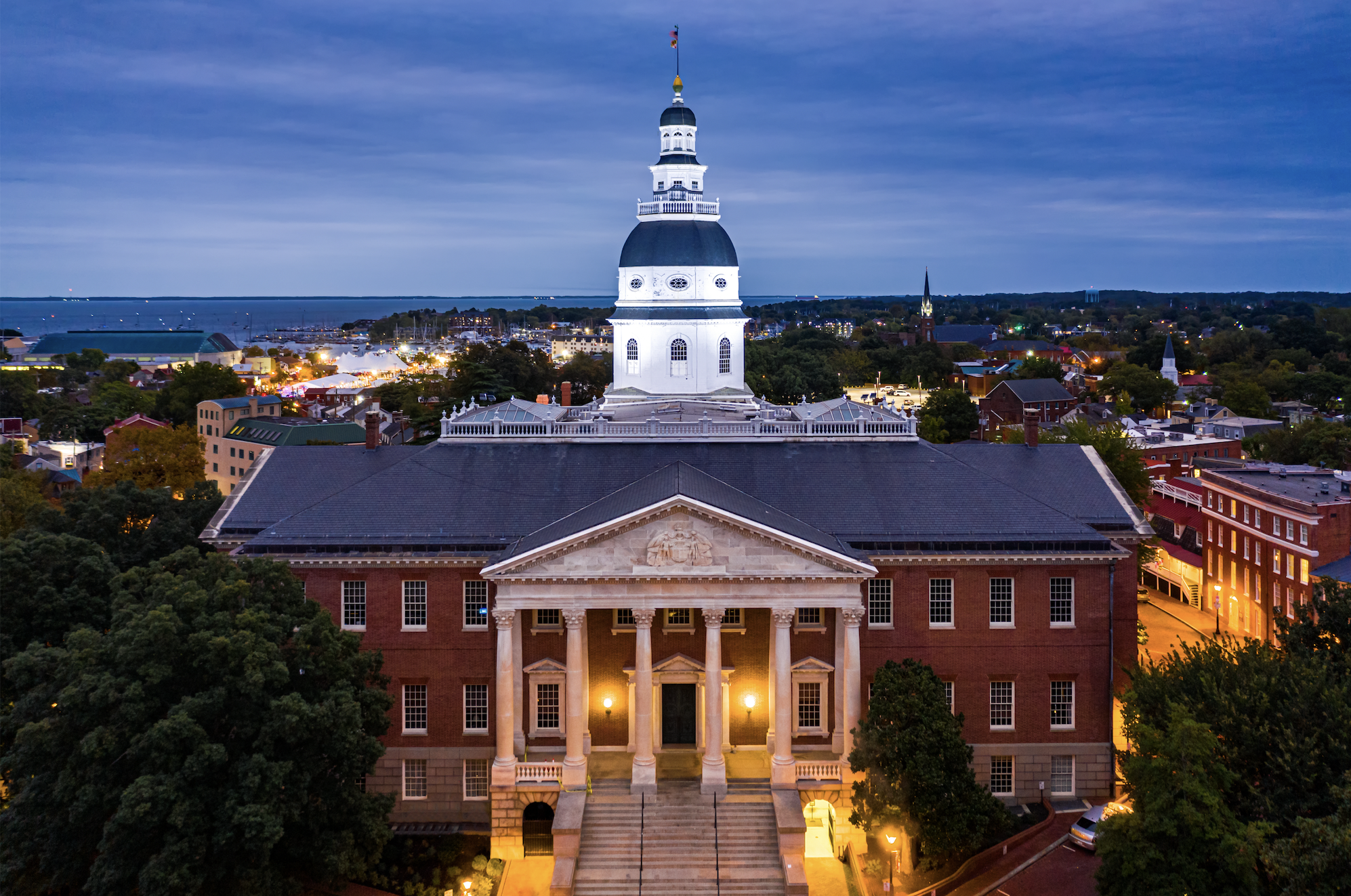
Annapolis never really goes quiet, even between sessions. Between a special session on the calendar, an infrastructure project still finding its footing, and a budget picture that keeps getting tighter, this is a good moment to take stock of where things stand. Here’s what’s on our radar and why it matters for Maryland’s business and civic leaders.
1. A special session with a narrow agenda, and lawmakers who want it widened
The Maryland General Assembly returns to Annapolis August 3-5 for a special session centered on congressional redistricting. House and Senate leadership have directed the Department of Legislative Services to limit bill drafting to that single issue, and Governor Wes Moore has issued the executive order formally calling lawmakers back.
Not everyone is on board with keeping the scope that tight. Some Republican members have raised the possibility of sitting out the session in protest, arguing the effort amounts to a partisan redistricting push rather than a response to any pressing need. Others have pointed out that lawmakers left plenty of unfinished business on the table this spring, from energy costs to the state’s economic competitiveness, and would like the special session to address more than one topic.
For organizations that track legislative activity, the real story here isn’t just redistricting. It’s a preview of how much appetite there is in Annapolis to reopen other conversations before the regular session resumes in January, and how a three-day session with a single stated purpose might end up shaping the political temperature heading into the fall.
2. The Key Bridge rebuild timeline draws renewed attention
More than two years after the Francis Scott Key Bridge collapse, the rebuild remains one of the most closely watched infrastructure projects in the region, and interest in its progress continues to build. A recent congressional tour of the site brought fresh visibility to funding levels and the project’s path toward its targeted completion.
This matters well beyond the bridge’s immediate footprint. The Port of Baltimore has continued to post strong performance numbers since the collapse, and the bridge rebuild stands as a marker of the region’s long-term freight capacity, commuter connectivity, and federal investment in Maryland infrastructure. Each milestone reached moves the region closer to a fully restored corridor, with real benefits for the businesses and communities that depend on the port and the roads around it.
3. Affordability pressure is showing up everywhere at once
Housing, health care, and local government budgets don’t usually make the same headline, but this year they’re all pointing in the same direction. Maryland is having a difficult year for homebuilding at the same time the state is managing a significant budget shortfall, and hospitals and health systems are absorbing real pressure on mental health and addiction services even as demand for that care continues to grow.
A new law taking effect this month created a task force to study how counties and municipalities fund themselves going forward, a sign that the fiscal squeeze is already reshaping how local governments plan. Hospitals are in a similar position: they’re being asked to do more with less at the exact moment communities need them most. That’s not a footnote to the affordability conversation. It’s central to it, and it’s why health systems need to be at the table early, making the case for what’s at stake if that support erodes.
Want to talk through how any of these developments might affect your organization? Reach out to the KO team.